
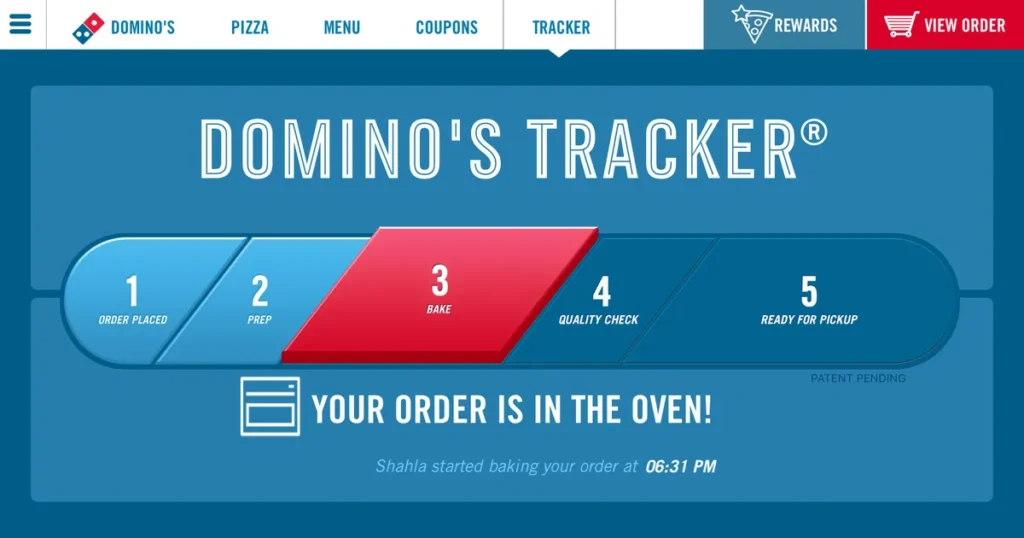
You order a pizza online and, within seconds, a bar appears that advances almost like magic: order received, prep, oven, quality check, and out for delivery.
For the customer, it’s a simple, intuitive, and almost entertaining experience. A single question is answered in real time: “Where’s my pizza?”
But behind that simplicity lies something far more sophisticated: a combination of patented technology and a global brand strategy that turns a complex logistics process into a seamless digital experience. It’s a clear example of how intellectual property —patents and trademark registrations— sustains a business that most people use without noticing.
And if you look closely at the bottom of the Domino’s Tracker, a key clue appears: “U.S. Patent #10,262,281“. It’s not a decorative detail. It’s the mark of a protected invention.
The patent: the invisible engine behind the tracker
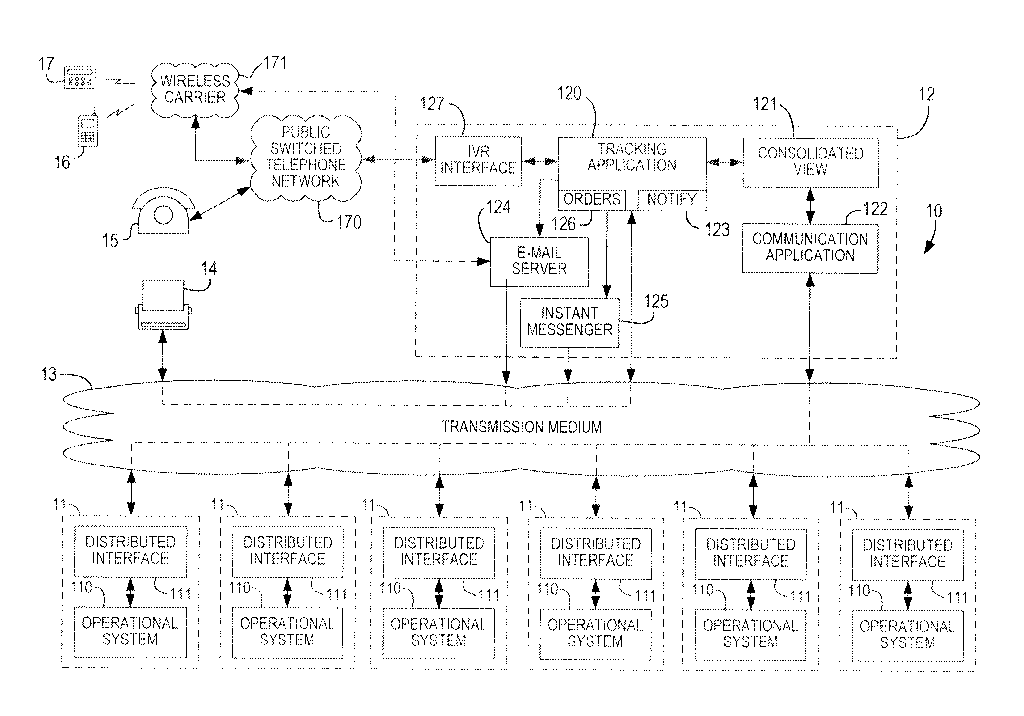
U.S. Patent 10,262,281 B1 —”Method and System for Centralized Order Status Tracking in a Decentralized Ordering System”— was filed in 2007 and granted in 2019 to Domino’s IP Holder LLC.
Its goal? To solve a very real problem: how do you give the customer a single, centralized experience when orders are prepared across hundreds or thousands of different locations?
Behind the screen, something like this happens:
1. The order enters the system
The order is logged into a digital platform and linked to a customer identifier (phone, email, username, or order details).
2. The system decides which location handles it
Based on location, availability, or other criteria, the order is assigned to the appropriate store.
3. The store “reports what’s happening”
Every important event is recorded:
- 🍕 in prep
- 🔥 in the oven
- ✅ quality check
- 🚗 out for delivery
The bar isn’t guessing anything: someone or something is reporting each step.
4. The information travels to a central system
The data is sent to, or pulled from, a central platform that coordinates all the locations.
5. It all becomes a simple experience
The system turns technical data into something anyone can understand: a clear, visual progress bar.
6. The customer sees it without seeing the complexity
It doesn’t matter which server, which software, or which store is behind it. The user only sees their order move forward. They can even get updates by web, SMS, email, phone call, or messaging.
In other words: what looks like a five-step bar is really a coordinated network of systems, data, and communications. And that entire machine rests on a registered invention, which the patent protects from copying. That’s the real value of protecting intellectual property: turning an idea into a defensible asset.
Do you have a technology, a process, or a brand that sets your business apart?
Contact us at BE IP and a specialist will guide you on how to protect them and turn them into a business asset.





 English
  Spanish